Your Product Wasn't Built to Connect to Everything. Now It Can.
The Cost of Saying No
A prospect gets to the final step. Pricing looks good, the demo landed, then someone on their side asks if you connect to the one system they can’t give up, and you cannot.
The deal stalls, or worse, they walk to a competitor who happened to say yes.

It rarely stops at one lost deal. Customers who do sign start asking for the same connection six months later, and now it’s a support ticket instead of a sale. Engineering gets pulled off the roadmap to hand-build a one-off integration for a single account. Do it enough times and half your integration team is maintaining connections that only exist because you couldn’t say no twice.
None of this says anything negative about your product. Every software company hits this ceiling. The systems you didn’t build for were never going to be a short list, and building toward all of them yourself was never going to be the answer.
You Already Have Integrations. This Is Where They Stop Working
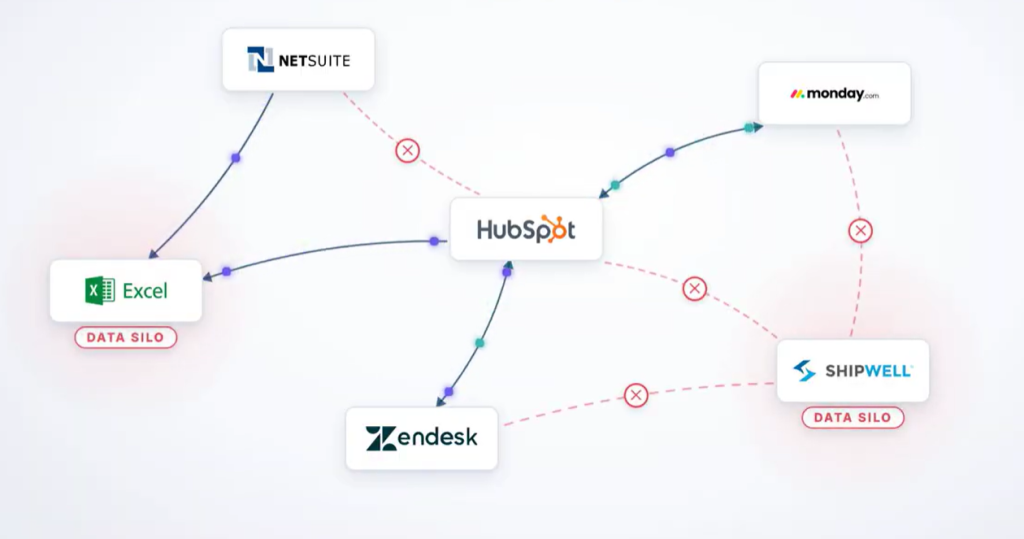
Your system likely already connects to a few of the tools your customers run. Native integrations exist between plenty of major systems, and they work fine for what they’re built for: moving the same data, the same way, between exactly two systems.
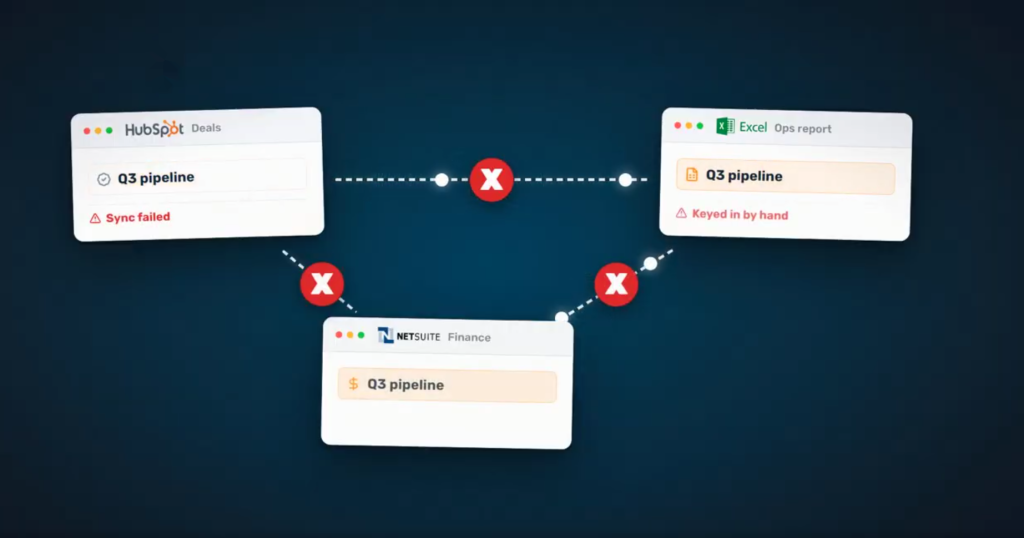
The problem shows up when a customer needs more than that. When data has to come from three departments instead of one. When two systems need to follow the same business rule, not just pass the same field back and forth. A one-to-one integration can’t do that. It was never built to.
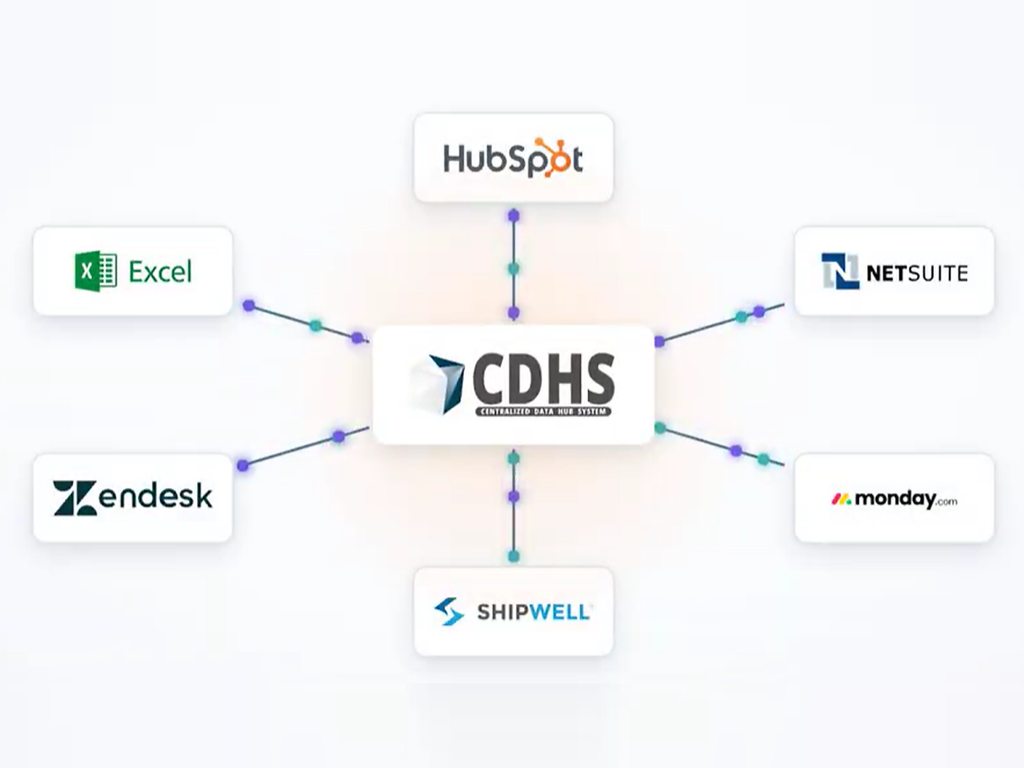
That’s the gap CDHS closes. CDHS is a governance layer that sits above the systems you already connect to and decides how data moves between all of them at once, following the actual rules your customer’s business runs on. Your customer’s data stays where it lives. CDHS makes sure every system agrees on what that data means, when it means it, and which system’s version wins when they disagree.
You don’t change how your system works. You don’t hand over your customer’s data. You connect once, and everything downstream gets treated the way it’s supposed to be, no matter how many systems are involved.
One Layer Above Every System You Run
CDHS works like a city’s infrastructure. Every building doesn’t need a direct road to every other building. They all connect to the same system of roads, and the roads know how to get anywhere from there.
Translate Every Field Between Systems.
Field names, formats, and definitions rarely match between two systems. CDHS reads both sides, translates them into one shared definition, and delivers the data so it means the same thing wherever it lands.
Enforce The Business Rules Across Every System.
Discount thresholds, territory routing, approval floors, escalation windows all live as named settings with owners and histories. When your customer changes a rule, the very next record follows it, and the change happens without a ticket to your engineering team or a wait for the next release.
Serve One Source Of Truth To Every System.
Every system reads from the same governed single source of truth. When one changes, every downstream system follows automatically, in both directions.
How to Join the Network
Step 1. A Conversation.
We start with a call to understand your product and the integrations your customers are asking for. This is a fit conversation, before any technical scoping.
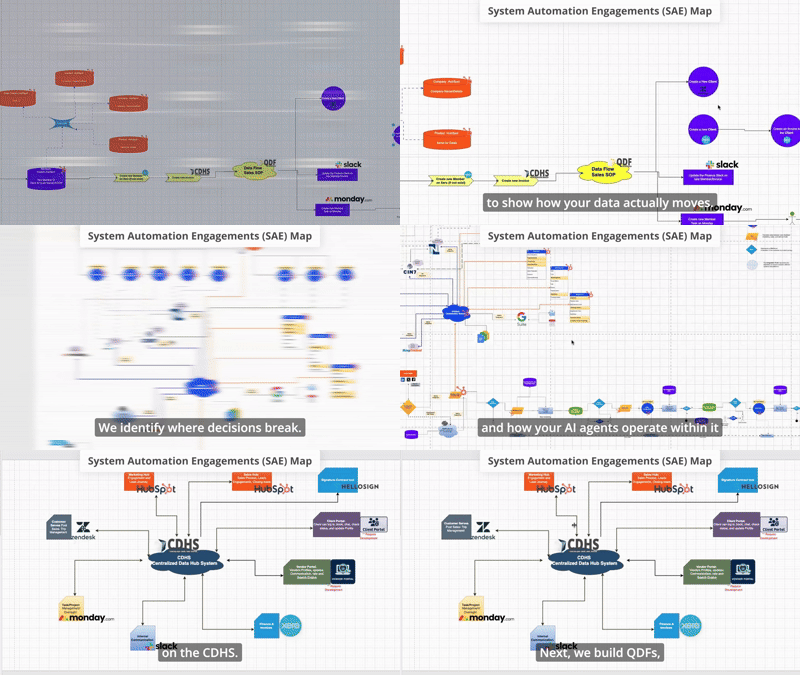
Step 2. The SAE Map.
If we agree it’s a fit, we run the Systems Automation Engagement (SAE) Map. It’s our discovery tool for walking through your data model, integration points, and the business rules that have to hold across every system.
Step 3. Scope And Build.
We scope the connection from your product to CDHS, build it, and test it against real customer scenarios.
Step 4. Live And Maintained.
Once live, we maintain it the way we maintain every other connection in the network. Your engineering team stays focused on your product while your supported integrations grow with the network.
The Payoff
You’ll never have to turn a customer away again over an integration you can’t support.
That’s the plain version of what changes. Right now, when a prospect asks if you connect to a system you don’t support, the answer is no, and the deal either stalls or walks. Once you’re in the CDHS network, the answer is yes, regardless of what system they’re asking about.
Nothing about how your own system works has to change. You keep your logic, your data structure, your product exactly as it is. CDHS connects around it.
And you’re not the one absorbing the ongoing work. Every new system your customers bring you gets handled inside CDHS.