
























HubSpot Is About to Make Decisions for You. But On Whose Numbers?
HubSpot Unbound 2026 is about growth rebuilt around AI you can trust to a number. But even the smartest AI is useless if the data underneath it is wrong. Fruition RevOps builds the layer that decides which system is right before HubSpot moves.
The Meeting That Starts With an Argument
You know the meeting. The forecast is up on the screen, and before anyone can act on it, someone says the number looks wrong.
Sales is working from the pipeline in HubSpot. Finance is working from what actually got invoiced. The board remembers a third figure from last week’s deck. Same week, same accounts, three different numbers. The first twenty minutes go to deciding whose is real.
It reads like a reporting problem, so it gets treated like one. Cleaner dashboards, another source bolted on, one more reconciliation before the next meeting.
The real issue sits a layer down. Your systems all agree they’re connected. They just don’t agree on the number, and nothing in the stack is deciding which one is right.
So the decision waits. And the CRM you’re about to let act on that number is standing on the same argument.
You Didn't Break It. You Just Have to Explain It.
When the numbers don’t agree, someone has to account for the gap. That someone is usually you.
You didn’t enter the wrong figure. You didn’t skip a step. But you own the number, so when Finance and Sales arrive with different totals, you’re the one who reconciles them by Friday and explains the discrepancy on Monday.
Every month it takes the same toll, and none of it comes back. Time, while ops rebuilds the real number by hand. Speed, while decisions sit and wait for everyone to agree on the facts. Trust, a little more each time leadership catches a dashboard that was wrong.
This is structural. Every system is sure of its own number, and nothing above them decides which one is right. No amount of effort inside a single tool fixes that.
You carry the consequence of a problem you can’t solve from inside any one system.
HubSpot Is Becoming a Decision Engine. Feed It Accordingly.
That’s the message of Unbound this year. HubSpot is moving from a place you record work to a system that decides and acts on it. The agenda is full of it: Breeze agents working across the customer journey, workflows that trigger themselves, a CRM built to turn data into the next move. There’s a whole session on building a decision engine that turns your data into action.
It’s a real upgrade, and it’s the right direction. It also raises the stakes on the one thing no keynote lingers on.
A decision engine is only as good as the records it fires on. Point it at data your systems agree on, and it compounds every good call. Point it at data they don’t, and it makes the wrong call faster and more often than any person would, and with total confidence.
Before you hand HubSpot the wheel, the data it’s steering by has to agree.
Just Because They're Connected Doesn't Mean They Agree.
Your systems are already connected. HubSpot talks to your finance system, that system feeds the reports, and somewhere a spreadsheet holds the version one team trusts more than either.
Connection moves data between them. It doesn’t decide which one is right when they disagree.
Same Account. Three Systems. No Agreement.

So your one account carries three live values at once. HubSpot has the number sales is working. Finance has the one that was actually invoiced. The spreadsheet has the one someone reconciled by hand last quarter. All three are current, and all three are right inside their own tool.
Nothing arbitrates. The value that wins is just the one whoever ran the report happened to pull, and every decision downstream is built on it.
What Is a Decision Layer, Anyway?
A decision layer is data governance that sits above all your connected systems, HubSpot or otherwise. It runs on rules you set, so when two or more systems disagree about the same record, it already knows which answer is right.
For example
Take a single one of your contacts. In HubSpot their lifecycle stage still reads Customer, so marketing keeps sending upsell campaigns. In your billing system, that same subscription lapsed 60 days ago and reads Churned. On the CSM’s spreadsheet, they show as Active, renewing next quarter.
Three systems, three answers to whether this company is even still a customer. So the renewal forecast counts revenue that’s already gone, marketing keeps pitching an account that walked, and the CSM is prepping a QBR for no one.
The decision layer closes it in one move. Billing owns subscription status, so Churned becomes the answer everywhere. Marketing stops, the forecast drops the dead revenue, and the CSM’s list is honest again.
Think of the decision layer as the referee for your data. It’s a set of rules about who’s right, enforced everywhere at once, so every team is finally looking at one number.
At Fruition RevOps, building that decision layer is what we do. When the data decides by rule, HubSpot’s decision engine finally acts on a number your whole business trusts.
Start by Finding Where the Data Splits
You can’t decide which system is right until you can see who’s holding what.
So the work starts with a map. Fruition RevOps calls this a Systems Automation Engagement (SAE) Map, a single picture of your systems and the revenue flow running through them. It shows every place the same record lives, every handoff between tools, and every point where two systems drift apart.
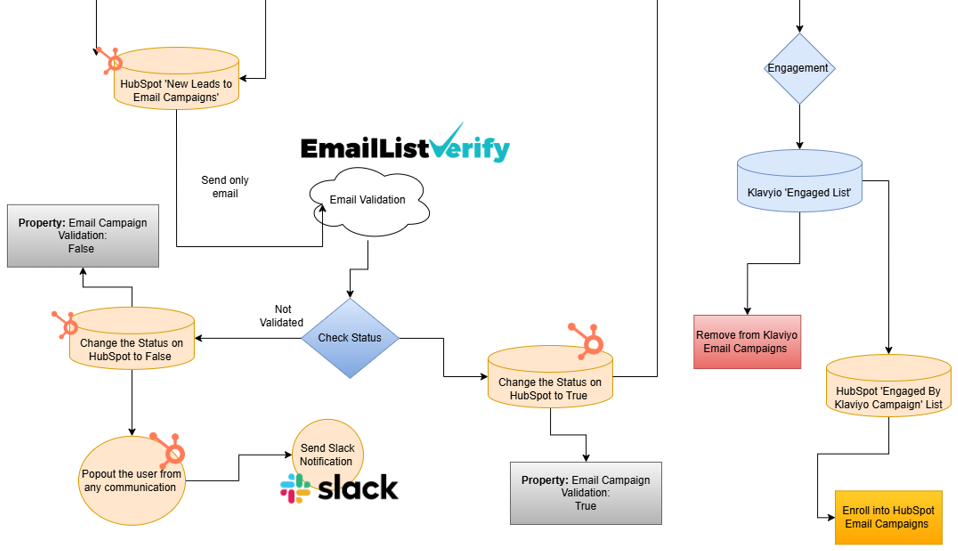
This map is your diagnosis. It shows which numbers are in conflict, which handoff is leaking, and where a decision layer earns its keep first. Until that picture is clear, we don’t build a thing.
Fix One Number First
You don’t rebuild the whole stack to prove the point. You pick one number that keeps causing arguments and you settle it once.
Say a deal closes in HubSpot. Finance reads the amount from the invoice in your accounting system. Ops reads it from the project record. Three teams, three figures, and a monthly meeting that opens with people reconciling which one is real.
Fruition RevOps builds a Quick Data Flow (QDF) for exactly that. It’s a small, rules-based flow that decides the answer at the workflow level: when these two systems disagree on deal value, the signed contract wins, and every downstream tool updates to match. One rule, one source of truth, running quietly under the tools your teams already use.
That’s the decision layer working on a single question. Once your teams stop arguing about that one number, the case for the rest makes itself.
Real-Life Example
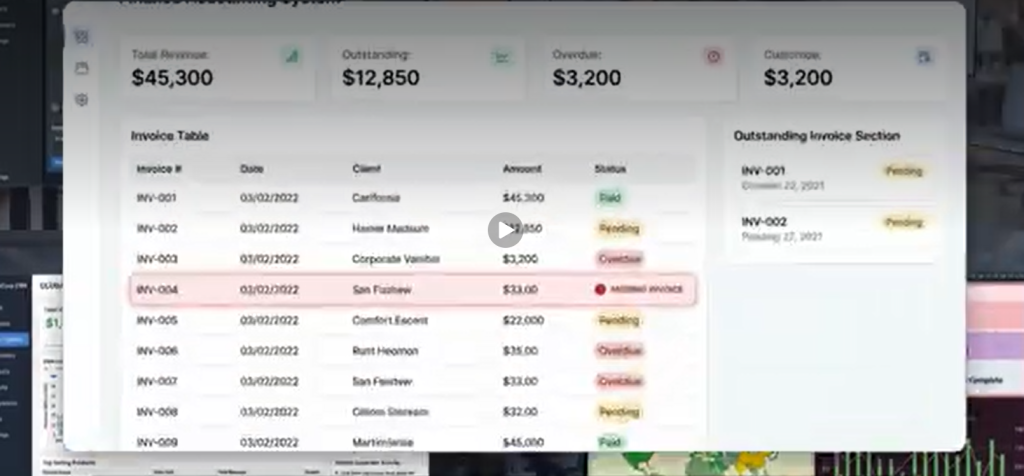
This is a case study of a real decision layer we built for a client, running on their real data.
Leads were coming in from a few different sources, and their systems didn’t agree on how to handle them. One tool had an owner assigned, another had the territory, a third flagged some as duplicates. Every new lead sat waiting while someone worked out who it belonged to and where it should go.
The decision layer we built reads all of that at once. It sorts each lead by the rules the client set, settles the conflicts between systems, and routes it to the right owner in seconds. No manual sorting, no lead sitting in a queue, no two reps chasing the same account. Everything downstream updates to match.
When One Rule Isn't Enough
One settled number proves the idea. But a company doesn’t run on one number, it runs on thousands, moving between systems every hour.
When you’re ready to govern all of them, that’s a Centralized Data Hub System (CDHS), the full decision layer Fruition RevOps builds. Instead of one rule settling one conflict, it sits across every system that holds a customer record and decides, continuously, which source is right for each field. Deal value, account owner, contract terms, lifecycle stage: one agreed answer, everywhere, kept current as the data changes.
We built one for a $100M+ manufacturer whose teams had spent years working from different numbers. Once the layer was running, sales, finance, and ops were reading the same records for the first time, and the monthly reconciliation meeting stopped being about whose figure was right.
That’s the difference between patching one argument and ending the whole category of them. QDF settles a number. CDHS makes sure there’s only ever one to settle.
Three Steps to a Decision Engine
1
Map It
We build your SAE Map so you can see exactly where your systems disagree and which conflicts are costing you the most.
2
Settle One Number
We put a single QDF in place on the argument that hurts the most, and prove the layer works on real data before anything else changes.
3
Govern the Rest
Once it’s proven, we scale to a full CDHS that keeps every system agreed, continuously.
The Decision Layer in the Wild
Here are three decision layers we’ve built, each settling a handoff that used to stall between systems.



The Handoff Decides Itself
A deal closes and payment clears, and the layer settles which system owns what, then starts the sales order and the production run against it. Nobody signs off the handoff by hand.


Requests Route Without a Referee
A request comes in and the layer decides where it belongs, opening the ticket and the invoice in one move. No one has to arbitrate which system gets it first or copy fields across by hand.
Projects Start on the Right Number
The moment a deal is agreed, the layer confirms the figures and kicks off the project against them. Your ops team stops waiting on a handoff, and stops building from a number that’s already changed.
What Changes When the Numbers Agree
The Meeting Starts on the Decision
No one spends the first fifteen minutes working out whose figure is real. There’s one figure, every system already shows it, and the conversation begins where it should.
The Decisions Get Faster
When the number isn’t in question, you move straight to what to do about it, instead of stalling on whether to trust it.
You Present Without Getting Caught Out
The forecast you show leadership matches what Finance sees and what Ops is running on. Nobody pulls up a different screen and undercuts you in the room, because there isn’t a different number to pull up.
Bring the Numbers Your Teams Keep Fighting About
At Unbound 2026, you’ll see what HubSpot AI can do for you. It’s worth seeing, and it can genuinely help you. Just remember that every agent you turn on reads from the systems you already have, and if those systems disagree, the agent inherits the argument.
So before you automate on top of the mess, settle what’s underneath it. Bring us the one number your teams keep fighting about, the figure that’s different in three systems and costs you a meeting every month. In 20 minutes we’ll map where it splits and show you what it takes to settle it for good.