




























Where Can I Find Marketing Operations Services That Specialize in Data Analytics?
Marketing operations services that specialize in data analytics are easiest to find once you know which question you need answered. Most marketing leaders arrive with a feeling more than a question. The reports don’t add up, sales doubts the leads, and nobody can say which campaign earned last quarter’s deals.
Marketing operations services are outside experts who look after the machinery behind your marketing, such as the tools, the data, and the reports. Some focus on running campaigns. Others focus on the numbers. Those who specialize in data analytics help you trust what the numbers say and act on it.
This post starts with the things people say in marketing meetings. Each one points to a different kind of help and a different place to find it. A plain-English glossary at the end explains every term we use.
Match Your Meeting to the Right Marketing Operations Services
Find the sentence that sounds most like your Monday meeting. The row tells you what’s going wrong, what kind of help fixes it, and one question to put to any provider.
| What you hear | What's going wrong | Help that fixes it | Ask the provider |
|---|---|---|---|
| "Sales says our leads are junk." | Marketing and sales count a good lead in different ways. | Someone who sets one shared definition and builds the reports on it. | How have you settled a lead definition between two departments before? |
| "We can't tell which campaign brought in that deal." | Nobody recorded where each buyer first came from. | Someone who sets up tracking so every deal shows its source. | Can you show me a report where each closed deal lists its first campaign? |
| "Our numbers never match finance's numbers." | Each system keeps its own copy of the customer. | Someone who connects the systems so they share one record. | Which systems have you made agree with each other, and how did you check? |
| "Half the emails in our database bounce." | The database is full of old, duplicate, or incomplete records. | Someone who cleans the data and sets rules to keep it clean. | What do you do after the cleanup so the mess doesn't come back? |
| "We spend the same every year because we can't prove what works." | There's no way to compare what each channel added. | Someone who builds a model of past spending against past sales. | Which past results did you use to test your model? |
| "Every dashboard tells a different story." | Reports were built one at a time by different people. | Someone who rebuilds the reports from one trusted source. | Who will own these reports after you leave? |
Most companies recognize two or three rows. That’s normal. Start with the row that costs you the most arguments, because the fix for it usually helps the others.
Which Campaigns Produced Pipeline?
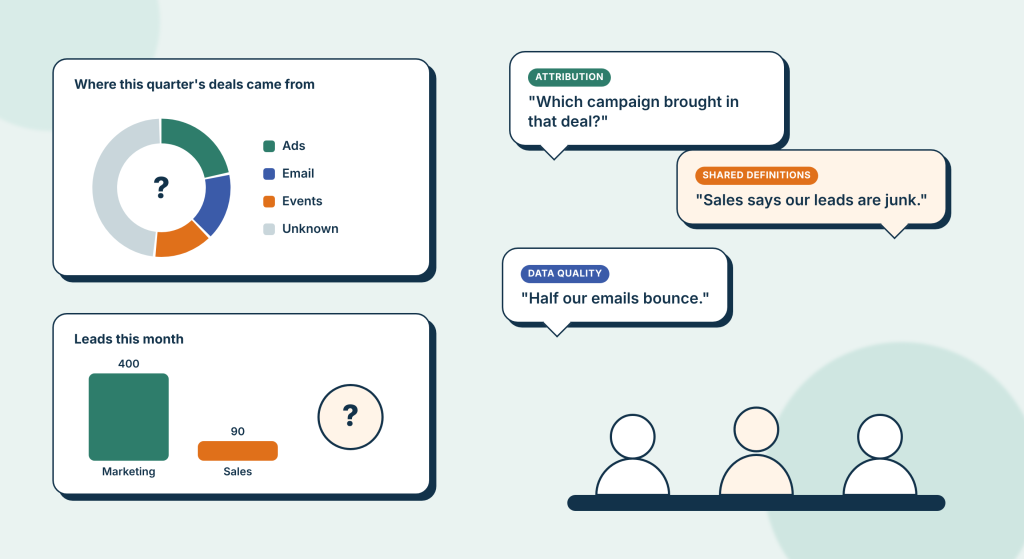
This is the question marketing leaders get asked most, and the one they find hardest to answer. The tool for it is called attribution. Attribution is the receipt trail for your marketing. When a deal closes, it shows which ad, email, or event first brought that buyer to you, and which ones helped along the way.
Attribution in marketing depends on one simple habit. Every time a new person fills in a form or books a meeting, your systems have to record where they came from. If that step is skipped, no report can fill the gap later.
The marketing operations services that do this well start by setting up the tracking. Then they check that it records the right source and build one report that sales and marketing both accept. Ask to see that report from a past client, with the names hidden. If they can only show you a dashboard design, keep looking.
There are two common ways to give credit. The simpler way gives all the credit to the first thing a buyer touched, such as the ad that brought them to your website. The fuller way shares the credit across everything they touched before signing, such as the webinar, the follow-up emails, and the sales call. Neither is wrong. A good provider will explain which one fits your sales cycle and why.
G2 keeps a category of marketing analytics services with user reviews. In G2’s words, these providers help businesses “measure, analyze, and improve the performance of their marketing.” Read the reviews for mentions of attribution and pipeline, and skip firms whose reviews only talk about ad performance.
Why Don't Marketing and Sales Numbers Match?
This problem rarely comes from bad math. It comes from two departments using the same word for different things. Marketing may count a lead the moment someone downloads a checklist. Sales may only count a lead once someone asks for a price. Both reports are correct by their own rules, so they never agree.
The fix is a shared set of definitions, written down and built into your systems. Marketing people call these lifecycle stages. They are the steps a person moves through, from first visit to paying customer, with a clear rule for each step.
Marketing operations services that specialize in this sit down with both departments, agree on the rules, and set up the reports to follow them. The best ones expect some disagreement and plan time for it.
A small example shows why this matters. Say marketing reports 400 leads last month and sales reports 90. Both numbers can be true at once. Marketing counted everyone who downloaded something. Sales counted only the people who asked to talk. Once the two departments agree on one rule, the gap stops being an argument and becomes a useful number to track.
Can We Trust What's in Our Database?
A report can’t be better than the records underneath it. Over time, any database fills up with duplicates, people who changed jobs, and contacts with half their details missing. Reports built on those records look precise and still mislead.
Gartner research from 2020 found that poor data quality costs organizations at least $12.9 million a year on average. The figure appears on Gartner’s data quality page. Smaller companies lose less in dollars, but the pattern is the same. Bad records waste sales time and send campaigns to people who left long ago.
A cleanup alone doesn’t solve this. The same mess returns unless someone sets rules for how new records come in. Good providers do both. They clean the existing records first. Then they set rules, such as requiring a company name on every new contact or merging duplicates the moment they appear.
If your company runs HubSpot, the HubSpot Solutions Directory lists certified partner agencies. You can filter by accreditation, such as customer relationship management (CRM) implementation or data migration. Both point to partners who have done this kind of work. Our Data Leakage Calculator can help you estimate what messy records cost your own business before you talk to anyone.
Where Should Next Quarter's Budget Go?
Gartner’s 2025 survey of chief marketing officers found that marketing budgets stayed flat at 7.7% of company revenue. With budgets holding still, every channel has to earn its share, and guesswork gets expensive.
The tool for this question is called marketing mix modeling. It looks at past spending and past sales, week by week, and estimates how much each channel added. It works even when you can’t track every buyer by name, which makes it useful for channels like events, radio, or brand campaigns.
This kind of modeling used to belong to large companies with big research budgets. That has changed. Google now offers its Meridian model, which it describes as an open-source marketing mix model, and Meta offers a similar one called Robyn. Open source means the model is published for anyone to use. You still need someone skilled to feed it clean data and read the results honestly.
When you talk to providers for this work, ask which past results they used to test their model. A model that can’t predict last year’s results won’t predict next year’s either.
Why the Numbers Disagree in the First Place
Look back at the table, and a pattern shows up. Most of the problems start in the same place. The marketing tool, the CRM, and the finance system each keep their own copy of a customer, and each copy follows its own rules.
Analytics help can fix the reports. The reports stay fixed only when the systems underneath agree on what a lead, a customer, or a deal means. That is where we work. Fruition RevOps’ Centralized Data Hub System (CDHS) acts as a translator between the marketing tool, the CRM, and finance. Once it’s in place, each of them reads a customer the same way.
Plain-English Glossary
- Attribution is the record of which marketing efforts brought a buyer to you and helped them decide.
- Customer relationship management (CRM) means the software where sales keeps track of people, companies, and deals.
- Lead is a person who has shown interest in what you sell, such as by filling in a form.
- Lifecycle stage is a step a person moves through on the way to becoming a customer, each with a clear rule for moving forward.
- Marketing mix modeling is a method that compares past spending with past sales to estimate what each channel added.
- Pipeline is the total of deals your sales department is working on that haven't closed yet.
- Data hygiene is the ongoing work of keeping records accurate, complete, and without duplicates.
Frequently Asked Questions
What Do Marketing Operations Services Do?
Marketing operations services look after the machinery behind marketing. They set up and connect the tools, keep the data clean, and build the reports that show what marketing produced. Some focus on campaigns and others on analytics.
How Is Marketing Operations Different From RevOps?
Marketing operations covers marketing’s tools, data, and reports. RevOps covers the whole path from first contact to paid invoice, across marketing, sales, and customer success.
Should I Hire an Agency or Someone In-House?
An agency brings experience from many companies and suits a defined project, such as fixing attribution. An in-house hire suits ongoing work once the foundations are in place. Many companies use an agency first, then hire someone to keep things running.
How Can I Tell if a Provider Is Good at Analytics?
Ask to see a real report from past work, with client names hidden. Then ask how they checked that the numbers were right. A strong provider can explain both in plain language.
Can I Fix My Reporting Without New Software?
Often you can. Many reporting problems come from unclear definitions and messy records, and both can be fixed inside the tools you already own.
Find Out Which of Your Numbers You Can Trust
Better reports start with records that agree. We’re happy to look at where marketing and sales numbers part ways in your business. There’s no obligation attached.